
WELCOME BONUS 300%
UP TO €2000 + 100
FREE SPINS
UP TO €2000 + 100
FREE SPINS
Home → Games
Casino games at Martin Casino
9/6 table: nine for Full House, six for Flush
The 9/6 Video Poker Jacks or Better variant features a specific payout structure where the Full House pays 9 coins and the Flush pays 6 coins per wagered coin. This configuration delivers an RTP of 99.54% with a house edge of only 0.46%, which is significantly better than the 8/5 version that yields just 97.29% RTP. Consequently, players utilizing optimal strategy on this full-pay table retain their bankroll at a much higher rate over the long term compared to reduced tables.
Optimal play requires betting the maximum of 5 coins to unlock the Royal Flush bonus of 4000 coins, as standard payouts range from 1 coin for Jacks or Better up to 800 for a natural Royal. The statistical deviation of 4.42 indicates high volatility, meaning wins are less frequent but potentially larger than in low-variance games. Players must adhere strictly to basic strategy charts to achieve the advertised 99.54% return, as any deviation increases the house advantage immediately.
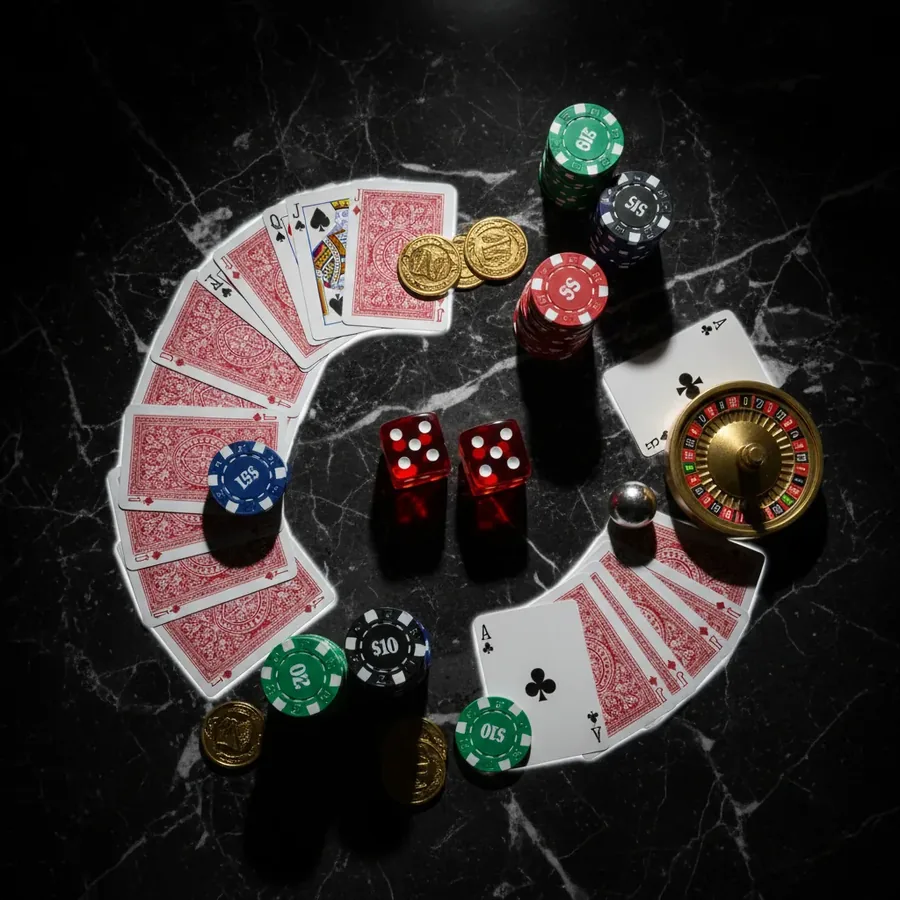
Plein Pays 35:1, Cheval Pays 17:1
European Roulette offers straight bets (Plein) paying 35:1 and split bets (Cheval) paying 17:1 across a wheel with 37 sectors including a single zero. These fixed odds result in a constant house edge of 2.70% for all waffle types, contrasting sharply with American Roulette where the double zero raises the edge to 5.26%. This mathematical consistency ensures that the casino retains 2.70% of every euro wagered regardless of whether the player chooses a single number or a dozen bet.
Connection Lost in Table Game: Round Continues Automatically
When a connection drops during a live or digital table game, the round continues automatically to ensure the integrity of the dealer's actions and RNG outcomes. Players do not lose their active bets due to technical interruptions, as the system locks the decision window until the session resolves normally. This mechanism protects the player from losing funds through disconnection errors while maintaining the standard speed of gameplay for all participants.
Martingale Fails After 8 Rounds at Table Limit
The Martingale doubling strategy typically fails after eight rounds when the escalating bet size hits the table's maximum limit before recovering previous losses. Starting with a base unit, the eighth bet becomes 128 times the initial stake, often exceeding the allowed ceiling for European Roulette limits. This structural barrier prevents the recovery of lost capital, demonstrating why progressive betting systems cannot overcome the inherent 2.70% house edge in the long run.
Double Down: double bet, only one card
Double Down allows players to double their initial bet in exchange for receiving exactly one additional card, a rule available in Blackjack 6 Decks with S17. This option applies even after splitting pairs, providing more opportunities to capitalize on strong starting hands like 11 or 10 against weak dealer upcards. Utilizing this move correctly according to basic strategy helps maintain the low 0.46% house edge associated with favorable table rules.
Game categories at a glance
| Category | Examples | Stakes From | Highlight |
|---|---|---|---|
| Slots | Buffalo Rising Megaways, Esqueleto Explosivo 2, Valley of the Gods | 0,10 EUR | thousands of titles |
| Table games | Roulette, Blackjack, Baccarat | 0,50 EUR | classic rules |
| Live casino | Crazy Time, Blaze Roulette | 0,20 EUR | real dealers |
| Jackpot games | Mega Moolah, Divine Fortune, Age of the Gods | 0,20 EUR | progressive pools |
| Instant games | Aviator, Plinko, Mines | 0,10 EUR | fast rounds |
| Video poker | Jacks or Better, Deuces Wild | 0,25 EUR | strategy based |
Three Roulette Variants, Three House Edges Compared
European Roulette features a single zero across 37 sectors, resulting in a house edge of 2.70% and an RTP of 97.30%. This edge remains constant for all bets, from straight numbers to red or black wagers. Players retain more capital here than in variants with higher edges.
American Roulette includes an additional double zero sector, raising the total to 38 positions and increasing the house edge to 5.26%. The RTP drops to 94.74%, nearly three percentage points lower than the European version. This structural difference significantly impacts long-term returns.
French Roulette maintains the 37-sector wheel but excludes La Partage for inner bets, keeping the house edge at 2.70%. While the payout structure matches European rules, the absence of early surrender mechanisms for specific wagers limits player protection. The effective cost of play aligns with standard European odds.
How Long Does a Roulette Round Take on Average?
Roulette rounds typically conclude within one to two minutes per spin, encompassing betting time and ball settling. This pace allows players to place multiple wagers against the 2.70% house edge in European variants. Faster sessions increase the volume of spins applied to the theoretical return rate.
Craps Pass Line bets operate on a different temporal scale, often lasting several seconds per roll with complex resolution steps. The game involves point establishment phases that extend the duration of individual outcomes. Table games generally require more interaction time than simple slot spins.
Video Poker hands resolve instantly after card selection, with payouts determined by the final five-card combination. A Jacks or Better 9/6 machine offers a 99.54% RTP when played with optimal strategy. The rapid cycle supports high-frequency play while maintaining low volatility compared to table games.
La Partage applies only to even money bets
The La Partage rule returns half the stake on even-money bets like red/black when the ball lands on zero. This mechanism effectively halves the house edge from 2.70% to 1.35% for those specific wagers. It provides partial loss recovery without altering the underlying probability distribution.
Inner bets such as straights, splits, and corners do not qualify for La Partage protection in French Roulette. These wagers face the full 2.70% house edge regardless of the zero outcome. Players risking capital on these areas accept higher variance without mitigation options.
Standard European Roulette lacks any early surrender provisions, requiring full stake forfeiture on zero hits. All 37 sectors contribute equally to the 2.70% house advantage across every bet type. The absence of refund rules increases the average cost per wager compared to French variants.
Pass Line in Craps: Process in Four Steps
The initial come-out roll determines immediate winners or establishes a point number for subsequent rounds. A seven or eleven wins instantly, while two, three, or twelve results in a loss for Pass Line bets. This phase sets the foundation for the entire betting sequence.
Once a point is established, players continue rolling until the point number appears again before a seven. Success requires matching the specific point value, which varies in probability based on the number rolled. The house edge on this base bet stands at 1.41%.
Free Odds bets can be added behind the Pass Line after a point is set, carrying a zero percent house edge. These wagers pay at true odds, such as 2:1 for points four or ten. Combining them reduces the overall casino advantage to approximately 0.37%.
The final resolution occurs when either the point repeats for a win or a seven appears for a loss. Outcomes depend entirely on dice probability rather than dealer intervention or random number generators. Players must manage bankroll across multiple rolls to sustain positive expected value.
American Roulette: 5.26 Percent Due to Double Zero
American Roulette wheels contain thirty-eight sectors including both single and double zeros, creating a 5.26% house edge. This figure is exactly double the European variant's advantage due to the additional losing pocket. The RTP reflects this disparity at 94.74% versus 97.30%.
The Five Number Bet covering zero, double zero, one, two, and three carries a distinct 7.89% house edge. This specific wager exceeds the standard wheel disadvantage and represents the worst option on the layout. No equivalent high-edge bet exists on European wheels.
Straight bets paying 35:1 still suffer the inflated 5.26% disadvantage despite identical payout structures to European tables. The extra zero dilutes winning probability without adjusting compensation rates. Players selecting American variants accept substantially higher long-term losses.
Read Statistics of Last 500 Rounds Correctly
The payout speed depends heavily on game contribution rates, where table games contribute only 10% to the bonus turnover requirement while slots contribute 100%. This disparity means that playing Blackjack or Roulette with a 300% welcome bonus up to €2,000 requires significantly higher wagering volume than slot play. Players must calculate the effective turnover by dividing the bonus amount by the contribution percentage to determine the true cost of clearing funds.
Roulette American Five Number Bet offers an RTP of 92.11% and a house edge of 7.89%, making it one of the least efficient bets for meeting wagering requirements. In contrast, Craps Free Odds with Pass Line provide a combined RTP of 99.63% and a minimal house edge of 0.37% on the total action. Choosing high-RTP games like these can reduce the time spent grinding through the bonus terms compared to low-edge alternatives.
Baccarat Tie bets carry a severe house edge of 14.36% with an RTP of 85.64%, drastically slowing down any potential withdrawal process due to rapid bankroll depletion. Conversely, Baccarat Player wagers offer an RTP of 98.76% and a house edge of just 1.24%, preserving capital longer during the wagering phase. Understanding these mathematical differences is crucial for managing the financial impact of the bonus conditions effectively.
Roulette Wheel with 37 vs 38 Pockets
European Roulette features 37 pockets including a single zero, resulting in an RTP of 97.30% and a consistent house edge of 2.70% across all bet types. This structure allows for predictable variance when calculating how quickly bonus funds from Martin Casino might be converted into withdrawable cash. The fixed edge ensures that players face the same mathematical disadvantage regardless of whether they place inside bets or outside propositions.
American Roulette introduces a double zero, creating 38 pockets and increasing the house edge to 5.26% while dropping the overall RTP to 94.74%. This additional pocket significantly accelerates the rate at which bonus money is consumed, thereby extending the time required to meet the wagering obligations set by the casino. The presence of the extra zero fundamentally alters the risk profile for anyone attempting to clear a 300% welcome bonus up to €2,000.
The American Five Number Bet covering 0, 00, 1, 2, and 3 pays 6:1 but carries a steep house edge of 7.89% and an RTP of 92.11%. This specific wager is statistically inferior to standard straight bets and further delays the realization of winnings due to its high cost per unit wagered. Players avoiding this trap will find their bonus clearance timeline more aligned with standard European roulette expectations rather than the inflated costs associated with this particular side bet.
What doesn't count: bets over 5 EUR
Any individual wager exceeding 5 EUR violates the terms of the 300% welcome bonus up to €2,000, rendering the entire bonus void immediately upon detection. This strict limit applies uniformly across all eligible games, meaning even a single large spin on a slot or a high-stakes hand at Blackjack triggers forfeiture. Players must carefully monitor their bet sizes to ensure compliance, as losing the bonus due to a minor breach negates the promotional value entirely.
Sic Bo Special Bets such as Specific Triple pay 180:1 but carry a house edge ranging from 7.87% to 18.52% depending on the specific variant chosen. While these high-payout options are exciting, placing bets larger than 5 EUR on them results in immediate disqualification from the bonus program. The risk-reward ratio becomes irrelevant if the violation of the maximum bet limit leads to the confiscation of both the bonus and associated winnings.
Video Poker Jacks or Better 9/6 tables offer an RTP of 99.54% and a house edge of 0.46%, providing excellent value for meeting wagering requirements within the allowed limits. However, if a player attempts to maximize returns by betting above the 5 EUR cap, they forfeit the benefit of the favorable odds entirely. Staying within the prescribed boundaries ensures that the theoretical return remains accessible without triggering the punitive measures associated with excessive wagers.
Four Blackjack Hand Decisions at a Glance
Blackjack paying 6:5 instead of 3:2 increases the house edge to 1.85% with an RTP of 98.15% on six-deck shoes, significantly impacting long-term retention of bonus funds. A $10 bet yields $12 on a natural win under the 6:5 rule, whereas the traditional 3:2 payout would return $15, highlighting the cost of this rule change. This structural disadvantage makes clearing the 300% welcome bonus up to €2,000 considerably more difficult compared to casinos offering standard 3:2 payouts.
Dealer standing on Soft 17 improves the player's position by reducing the house edge by approximately 0.08 percentage points relative to hitting soft 17 scenarios. Combined with Double After Split rules which further lower the edge by about 0.14 percentage points, these favorable conditions help preserve bankroll during the wagering period. Players utilizing basic strategy in these environments can expect slower erosion of their balance, facilitating a smoother path to withdrawal eligibility.
Splitting Aces and doubling after split are critical decisions that influence the overall RTP, which sits at 98.15% for this specific configuration of rules. Resplitting Aces adds roughly 0.08 percentage points to the player's advantage, while allowing doubles after split contributes another 0.14 percentage points improvement. These nuanced rule variations collectively determine the efficiency of bonus conversion, making strategic adherence essential for minimizing losses while fulfilling the turnover requirements.
Soft 17: the Ace counts 11 or 1
When the dealer hits on Soft 17, the house edge increases by 0.22 percentage points, directly reducing the RTP and accelerating the consumption of bonus funds. This rule change forces players to adopt more conservative strategies to mitigate the increased risk, often leading to fewer hands played per hour. Consequently, the time required to clear the wagering obligation for the 300% welcome bonus up to €2,000 extends significantly under these less favorable conditions.
Resplitting Aces provides a slight advantage to the player by improving the RTP by 0.08 percentage points compared to restrictions on splitting aces. This flexibility allows for more optimal play in specific scenarios, helping to preserve capital during the critical early stages of bonus activation. Players taking advantage of this rule can maintain a healthier bankroll, thereby reducing the volatility associated with meeting the mandatory turnover thresholds.
Double After Split enhances the player's expected return by approximately 0.14 percentage points, offering more opportunities to capitalize on strong starting hands. This rule works in tandem with other favorable conditions to offset the inherent house edge, ensuring that the cumulative cost of wagering remains manageable. By leveraging these specific blackjack rules, players can navigate the bonus terms more efficiently, balancing risk and reward to achieve successful withdrawal status.
Contact
Live - online chat
Banking






Providers






Martin Casino 2026